

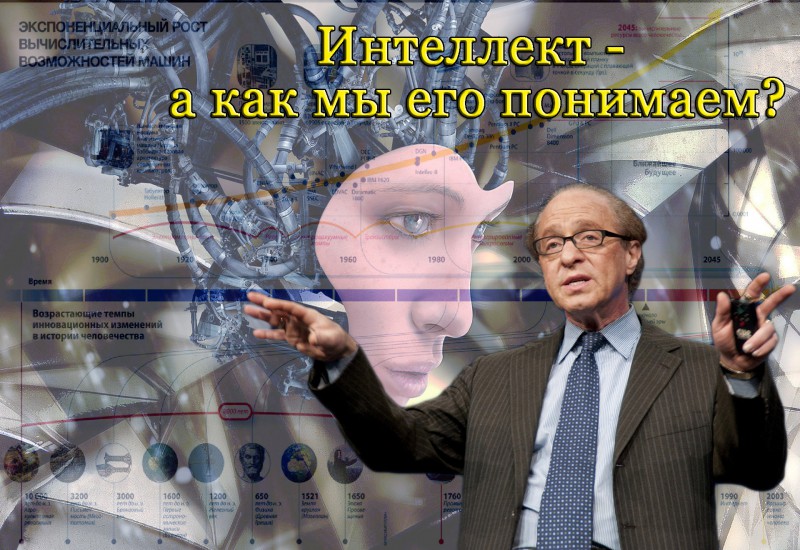
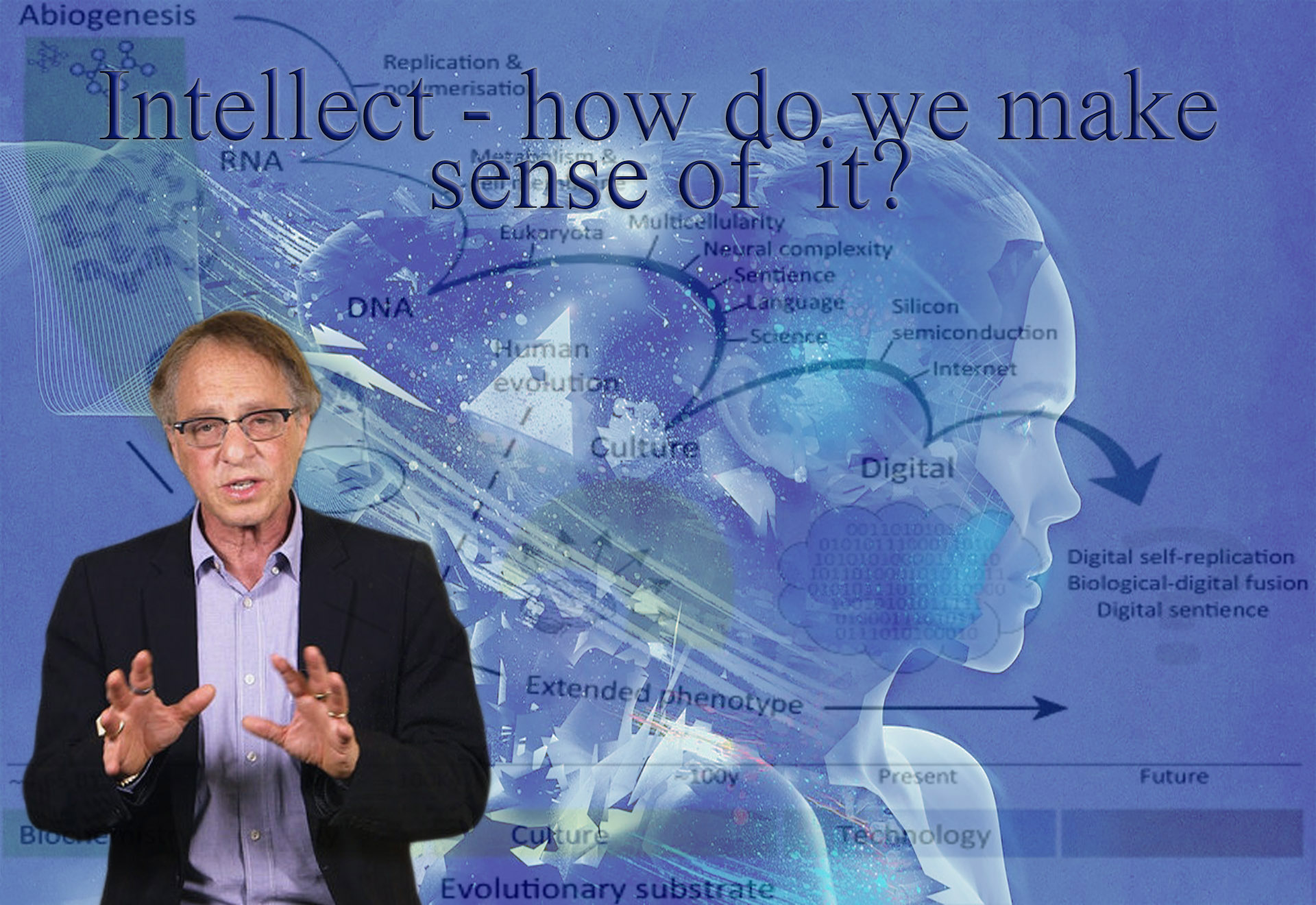
Intellect - how do we make sense of it?
We do not know what intellect is. And we do not know what consciousness is. We do not understand a lot of things. But we learn - the whole of humanity learns, from our mistakes as well. Therefore, we move, we know. The artificial intelligence is already before us, before our reality. What it is? Read the article, I hope it makes you think...
Well-known scientists of the last decade, including Elon Musk, Stephen Hawking and Ray Kurzweil, predict that by 2030 machines will acquire a consciousness of the human level of intellect. So, a series of unforeseen consequences is possible. For example, Musk, Hawking and dozens of other researchers signed a petition in January 2015, according to which machines based on AI can lead to "elimination of disease and poverty" in the near future. On the contrary, Kurzweil believes that by the 2030s people will be able to load their consciousness, thereby merging with machines, connecting to neuromodules. Elon Musk foresees the future, in which people will become pets for the lords of the machine.
"To achieve a singularity, it is not enough just to make today's software running faster," co-founder of Microsoft Paul Allen wrote in 2011. - We need to create smarter and more capable programs. To create this kind of advanced software, we need to understand scientifically the basics of human consciousness, but we hardly scratched the surface of this knowledge".
Technology Review, based on the research of Oxford Professor Nick Bostrom, specifies that artificial intelligence will threaten humanity in 60 years - in the 2070s (see Innovative artifact 00002). It is reported that artificial intelligence can think about 10% as a person by 2022, by 2040 - by 50%, by 2075 the thinking processes of the robot will be indistinguishable from human. And by that time a real threat of the revolt of cars against humanity will have arisen. Nick Bostrom offers to get rid of artificial intelligence completely and stop any researches in this area. He believes that this is a very dangerous direction, on which the future of all mankind depends.
On the contrary, over the last decades, we have actually seen a booming technological development; computers are becoming more powerful and accessible in leaps and bounds. Remember, in 2011, the supercomputer "Watson" beat two former champions in an intellectual game, using not the most complex (by today's standards) artificial intelligence and natural language processing? Or, for example, remember what computer you had 5-10 years ago, and what do you have now? The difference is impressive.
By 2045, we can become machines ourselves (this will be facilitated by Internet of Things, Internet of Everything, Internet of Human). We will have to realize a sufficiently advanced AI, and as a result - intelligent machines. However, the transition from advanced technology to artificially created consciousness is a giant leap. The most promising statements on the subject of AI are based on the false premise: we have already understood the human mind and consciousness. But in fact, we do not even understand the living cell of the body!
Experts in the field of AI work with a specific definition of intelligence: the ability to learn, recognize images, reflect emotional behavior and solve analytical problems. Nevertheless, this is only one definition of intellect from vaguely formed ideas about the nature of cognition. Neurology and neuropsychology, as promising directions, have not provided a specific definition of intellect yet - rather, they have many.
In the last few decades, work on conveyors and manufacturing jobs are more often done by robots. They cast, rivet and collect, performing mechanically complex and sometimes dangerous tasks. They are also in medicine, where they serve as surgical instruments and more and more perfect prostheses. Now they also receive feelings (sight and touch), along with a level of artificial intelligence that allows them to perform independently. The further 21st century goes, the more we have such robots. The age of Internet of Things have come.
In the future, advanced robotics and machine intelligence will exclude a human from production and will relieve him of labor. This will happen in each area, from the supply of goods and washing dishes to road repair and hostilities. Furthermore, radical improvements in computer intelligence are likely to lead to the emergence of robots and systems that will constantly analyze their own effectiveness and learn to correct their own mistakes - just like people. As networks of devices with sensors (Internet of Things) will send big data to computers for analysis, algorithms and software will handle the received information more effectively in a context-sensitive manner, automation and artificial intelligence will reach a new very high level. The industrial system or robots will learn to calibrate all tools and equipment automatically, the methods of handling and maintenance will be improved amazingly fast. Consequently, an extensive network of sensors will be able to provide a response to changing conditions. For example, nowadays smart thermostats, connected to air conditioners, determine when to turn the fan on and off, how to mix indoor and outdoor air, taking into account the temperature inside and outside the building.
Accordingly, this technology will ensure rapid detection of unpredictable conditions in real time and instant response to them using automated systems. The basis is artificial intelligence. What is the purpose? Is it an imitation of human thinking and decision-making skills, but bringing these processes beyond human capabilities? In the future, these tools will only be improved.
There are no guarantees that artificial machines will suddenly become kind and conscious. What shall we talk about, if we still do not understand the nature of consciousness, or what miracle do we hope for? Think at least of such an aspect of the mind as creativity. Creativity itself is a versatile thing; everyone considers it in his own way. To some, the creative process includes weeks spent in a separate room; for others, creativity begins with a bottle of alcohol; for the third, it is in the inspiration of the muse. The fourth understand creativity like the concentration in the process of work, and the fifth - the randomness. The question is whether machines with artificial intelligence will perform "coincidentally"? Probably not. The Kurzweil’s singularity suggests that ultimately AI will be a billion times more powerful than a human being in terms of intelligence. It is unlikely that AI will keep such useless things as accidents, alcoholism or concentration. There is no doubt that one day the software will be able to display beautiful, creative things with minimal (or zero) human intervention. Edison's electric chair was also considered a work of art. Creativity is not always conscious. Kurzweil, Musk and others did not predict the appearance of the bot "Tay" in "Twitter"; they only suggested that in 20 years we will copy the human brain, shove it in an artificial box and thus recreate the human consciousness.
The technological explosion is approaching, but our understanding of life remains vague. And yet, boundless areas of science should work in harmony to bring the singularity closer. Before trying to recreate something, you need to understand how it works. A miracle will not happen if we do not discover the secrets of the human mind.
Well-known scientists of the last decade, including Elon Musk, Stephen Hawking and Ray Kurzweil, predict that by 2030 machines will acquire a consciousness of the human level of intellect. So, a series of unforeseen consequences is possible. For example, Musk, Hawking and dozens of other researchers signed a petition in January 2015, according to which machines based on AI can lead to "elimination of disease and poverty" in the near future. On the contrary, Kurzweil believes that by the 2030s people will be able to load their consciousness, thereby merging with machines, connecting to neuromodules. Elon Musk foresees the future, in which people will become pets for the lords of the machine.
"To achieve a singularity, it is not enough just to make today's software running faster," co-founder of Microsoft Paul Allen wrote in 2011. - We need to create smarter and more capable programs. To create this kind of advanced software, we need to understand scientifically the basics of human consciousness, but we hardly scratched the surface of this knowledge".
Technology Review, based on the research of Oxford Professor Nick Bostrom, specifies that artificial intelligence will threaten humanity in 60 years - in the 2070s (see Innovative artifact 00002). It is reported that artificial intelligence can think about 10% as a person by 2022, by 2040 - by 50%, by 2075 the thinking processes of the robot will be indistinguishable from human. And by that time a real threat of the revolt of cars against humanity will have arisen. Nick Bostrom offers to get rid of artificial intelligence completely and stop any researches in this area. He believes that this is a very dangerous direction, on which the future of all mankind depends.
On the contrary, over the last decades, we have actually seen a booming technological development; computers are becoming more powerful and accessible in leaps and bounds. Remember, in 2011, the supercomputer "Watson" beat two former champions in an intellectual game, using not the most complex (by today's standards) artificial intelligence and natural language processing? Or, for example, remember what computer you had 5-10 years ago, and what do you have now? The difference is impressive.
By 2045, we can become machines ourselves (this will be facilitated by Internet of Things, Internet of Everything, Internet of Human). We will have to realize a sufficiently advanced AI, and as a result - intelligent machines. However, the transition from advanced technology to artificially created consciousness is a giant leap. The most promising statements on the subject of AI are based on the false premise: we have already understood the human mind and consciousness. But in fact, we do not even understand the living cell of the body!
Experts in the field of AI work with a specific definition of intelligence: the ability to learn, recognize images, reflect emotional behavior and solve analytical problems. Nevertheless, this is only one definition of intellect from vaguely formed ideas about the nature of cognition. Neurology and neuropsychology, as promising directions, have not provided a specific definition of intellect yet - rather, they have many.
In the last few decades, work on conveyors and manufacturing jobs are more often done by robots. They cast, rivet and collect, performing mechanically complex and sometimes dangerous tasks. They are also in medicine, where they serve as surgical instruments and more and more perfect prostheses. Now they also receive feelings (sight and touch), along with a level of artificial intelligence that allows them to perform independently. The further 21st century goes, the more we have such robots. The age of Internet of Things have come.
In the future, advanced robotics and machine intelligence will exclude a human from production and will relieve him of labor. This will happen in each area, from the supply of goods and washing dishes to road repair and hostilities. Furthermore, radical improvements in computer intelligence are likely to lead to the emergence of robots and systems that will constantly analyze their own effectiveness and learn to correct their own mistakes - just like people. As networks of devices with sensors (Internet of Things) will send big data to computers for analysis, algorithms and software will handle the received information more effectively in a context-sensitive manner, automation and artificial intelligence will reach a new very high level. The industrial system or robots will learn to calibrate all tools and equipment automatically, the methods of handling and maintenance will be improved amazingly fast. Consequently, an extensive network of sensors will be able to provide a response to changing conditions. For example, nowadays smart thermostats, connected to air conditioners, determine when to turn the fan on and off, how to mix indoor and outdoor air, taking into account the temperature inside and outside the building.
Accordingly, this technology will ensure rapid detection of unpredictable conditions in real time and instant response to them using automated systems. The basis is artificial intelligence. What is the purpose? Is it an imitation of human thinking and decision-making skills, but bringing these processes beyond human capabilities? In the future, these tools will only be improved.
There are no guarantees that artificial machines will suddenly become kind and conscious. What shall we talk about, if we still do not understand the nature of consciousness, or what miracle do we hope for? Think at least of such an aspect of the mind as creativity. Creativity itself is a versatile thing; everyone considers it in his own way. To some, the creative process includes weeks spent in a separate room; for others, creativity begins with a bottle of alcohol; for the third, it is in the inspiration of the muse. The fourth understand creativity like the concentration in the process of work, and the fifth - the randomness. The question is whether machines with artificial intelligence will perform "coincidentally"? Probably not. The Kurzweil’s singularity suggests that ultimately AI will be a billion times more powerful than a human being in terms of intelligence. It is unlikely that AI will keep such useless things as accidents, alcoholism or concentration. There is no doubt that one day the software will be able to display beautiful, creative things with minimal (or zero) human intervention. Edison's electric chair was also considered a work of art. Creativity is not always conscious. Kurzweil, Musk and others did not predict the appearance of the bot "Tay" in "Twitter"; they only suggested that in 20 years we will copy the human brain, shove it in an artificial box and thus recreate the human consciousness.
The technological explosion is approaching, but our understanding of life remains vague. And yet, boundless areas of science should work in harmony to bring the singularity closer. Before trying to recreate something, you need to understand how it works. A miracle will not happen if we do not discover the secrets of the human mind.